Boots to Business: What It Is and How Veterans Can Actually Use It
Learn what the Boots to Business program is, how it works, and how veterans can use it to build a real business after military service, including opportunities in auto transport.
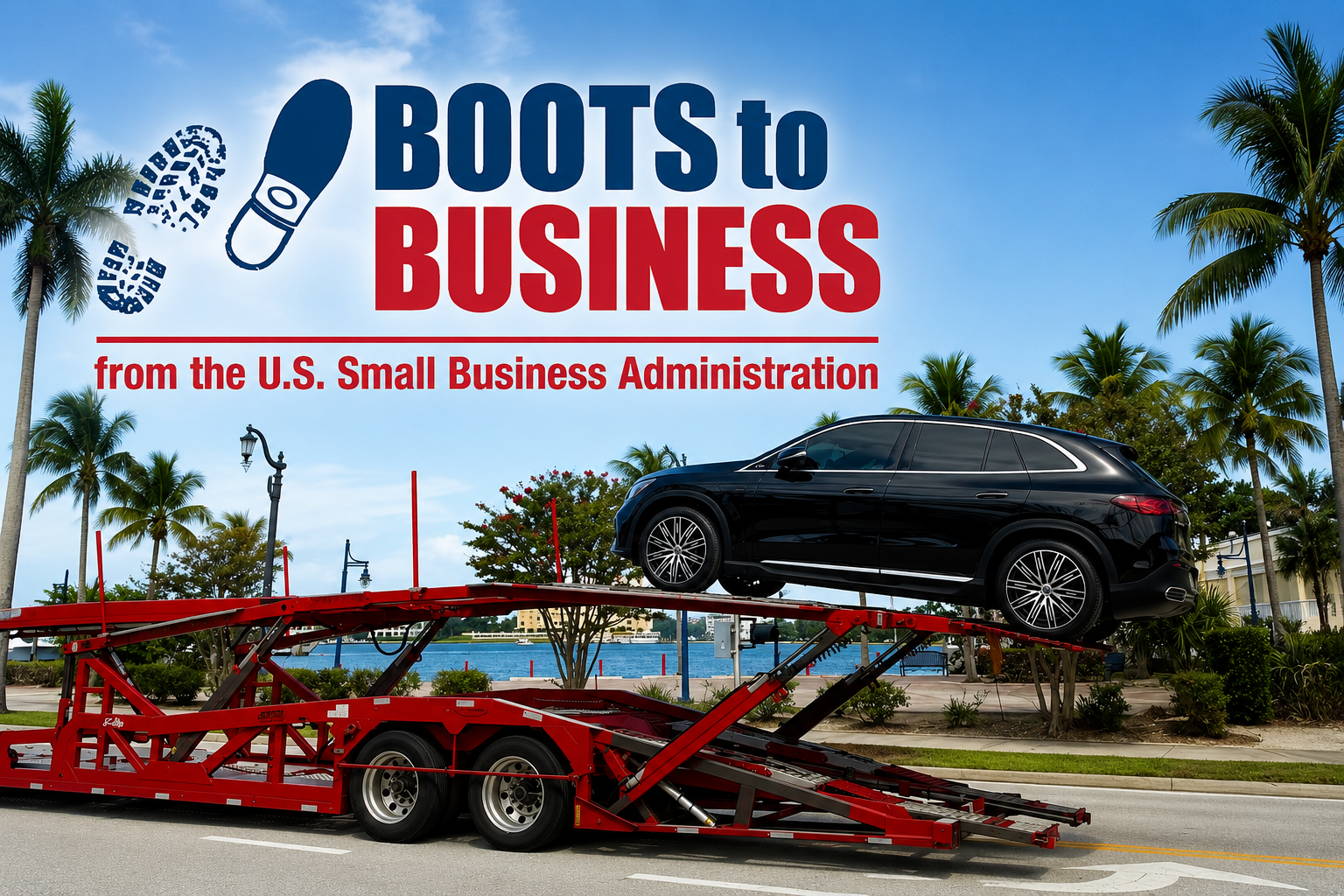
For many veterans transitioning into civilian life, one of the biggest challenges is figuring out what direction to take next. Entrepreneurship often becomes part of that conversation, but the path from interest to execution is not always clear.
That is where programs like Boots to Business come in.
Boots to Business was created to help veterans, transitioning service members, and military spouses better understand the fundamentals of business ownership.
The program is offered through the U.S. Small Business Administration and is designed to introduce participants to entrepreneurship in a more structured way.
For veterans exploring business ownership for the first time, it can be a valuable starting point. The key is understanding both what the program does well and where practical industry experience still matters.
Understanding the Boots to Business Program
Boots to Business is an entrepreneurship education program offered through the SBA as part of the Department of Defense Transition Assistance Program.
The program focuses on helping participants understand:
business fundamentals
evaluating business ideas
market research
basic financial planning
business structures and operations
Participants are introduced to the realities of entrepreneurship before making major financial or career decisions. The goal is not to hand someone a business overnight. The goal is to provide foundational education so veterans can approach business ownership more strategically.
For many people leaving military service, that structure can be helpful during a period that often feels uncertain.
What the Program Does Well
One of the strengths of Boots to Business is that it encourages veterans to think realistically about entrepreneurship rather than emotionally.
A lot of online business content focuses on hype, shortcuts, or unrealistic income claims. Boots to Business generally takes a more grounded approach. It introduces concepts like planning, operations, customer acquisition, and long-term sustainability.
The program also helps veterans become more aware of:
SBA resources
mentorship opportunities
financing considerations
business planning frameworks
That broader understanding can prevent costly mistakes early on.
For veterans who have never explored entrepreneurship before, it often provides a useful first layer of structure.
What the Program Does Not Do
One important thing to understand is that Boots to Business is an introduction to entrepreneurship, not a specialized industry training program.
That distinction is key.
The program may help someone understand how business ownership works generally, but it does not teach the day-to-day operational side of a specific industry.
For example, if someone decides to enter auto transport, they still need to understand:
how broker authority works
how vehicle shipments are coordinated
how pricing is structured
how carriers are vetted
how deals are actually managed operationally
That practical side is where many people still struggle after completing general entrepreneurship training.
Why Auto Transport Can Be a Strong Fit for Veterans
Many veterans exploring Boots to Business are looking for a business that is:
structured
scalable
realistic to start
operationally driven
Auto transport checks many of those boxes.
Unlike businesses that require storefronts, inventory, or large startup investments, an auto transport brokerage can be built with relatively low overhead while still offering long-term scalability.
The business revolves around communication, coordination, and execution. Veterans often adapt well because those same qualities already exist in many military environments.
Over the years, I have seen veterans transition into this industry successfully because they approach it professionally and stay consistent while learning the operational side of the business.
For veterans looking to build a business with location flexibility, our guide on how veterans can work from home after military service explores why remote business models continue to attract interest.
What the Business Actually Looks Like Day to Day
An auto transport broker’s day typically revolves around communication, coordination, and problem solving.
A shipment might begin with a customer requesting a quote to move a vehicle from Florida to Texas. From there, the broker works to:
coordinate pricing
connect with a qualified carrier
manage pickup and delivery timing
communicate updates throughout the shipment
Most of the work happens through phone calls, email, and transportation software rather than physical labor.
In the beginning, many brokers handle only a few shipments each week while learning the operational flow of the business. Over time, systems improve, carrier relationships strengthen, and volume becomes more consistent.
That operational structure is one reason many veterans adapt well to the industry.
How Veterans Can Use Boots to Business More Effectively
One of the smartest ways to approach Boots to Business is to treat it as a foundation, not a complete roadmap.
The program can help veterans:
understand entrepreneurship concepts
think more strategically
avoid unrealistic expectations
become familiar with SBA resources
But eventually, execution becomes industry-specific.
That is why choosing the right business model matters so much. The clearer the path, the easier it becomes to apply the concepts learned through general entrepreneurship programs.
Veterans who complete entrepreneurship training often begin researching grants, SBA financing, and startup capital. Our guide to Veteran Business Grants and Funding Options provides an overview of the most common funding paths available.
Veterans interested in transportation and logistics often find themselves drawn toward industries where systems, communication, and coordination matter. Auto transport naturally fits within that environment.
For a more complete breakdown of the industry itself, visit our guide on how veterans can start an auto transport business.
The Difference Between Information and Execution
One of the biggest misconceptions in entrepreneurship is that information alone creates results.
In reality, most people already have access to unlimited information online. The difficult part is understanding how to apply it properly within a real business environment.
That is especially true in industries like auto transport, where communication, timing, pricing, and operational flow all directly affect outcomes.
The people who usually progress fastest are not necessarily the people consuming the most information. They are the people following a structured process consistently while learning through execution.
Learning about entrepreneurship is only one part of the process. Our guide on Transitioning From Military to Business Owner explores what the journey often looks like after the learning phase ends and real-world decisions begin.
Final Thoughts
Programs like Boots to Business can provide veterans with valuable structure and a realistic introduction to entrepreneurship after military service. They help people begin thinking differently about business ownership, long-term planning, and what it actually takes to build something sustainable.
At the same time, success ultimately comes down to execution. Choosing the right industry, learning how that industry truly operates, and following a proven structure all matter far more than simply consuming information.
For veterans looking for a scalable business built around communication, systems, and operational consistency, auto transport remains one of the most practical opportunities available.
If you are exploring whether this industry is the right fit for you, start a conversation with me at Auto Transport Academy.
I built ATA around real operational experience inside the industry, with systems designed to help new brokers understand how the business actually works from the ground up.