
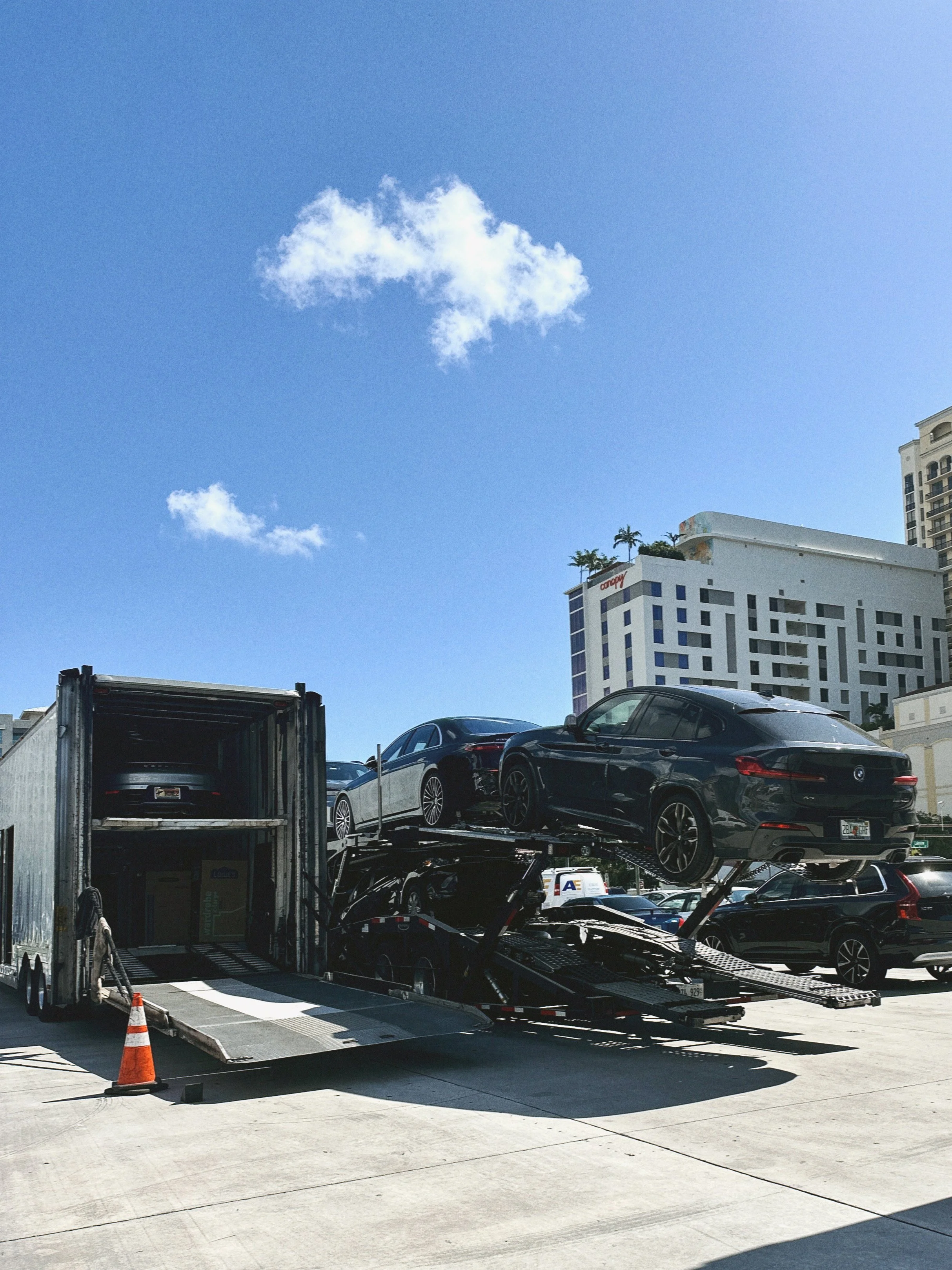
Start an auto transport broker business
Starting an auto transport brokerage requires more than obtaining a license or setting up a website. It involves building a compliant operation, understanding how shipments are coordinated, and developing a repeatable system for pricing, dispatch, and client acquisition.
This guide outlines the core components of the business and what it takes to establish a professional brokerage.
In This Guide
What an Auto Transport Broker Actually Does (Behind the Scenes)
Most people assume an auto transport broker simply connects a customer with a carrier. In reality, the role is far more involved — and when done correctly, it’s the main reason that determines whether a shipment runs smoothly or turns into a problem.
At a high level, a broker coordinates vehicle shipments between customers and carriers. But the real value isn’t just in making that connection. It’s in managing pricing (see how brokers actually make money), timing, communication, and execution from start to finish.
Every shipment involves multiple moving parts. Routes fluctuate daily, carrier availability changes by the hour, and pricing is not fixed. A broker’s job is to navigate that environment and structure the shipment in a way that actually gets the vehicle picked up and delivered on time.
For example, a vehicle shipping from Florida to New York might look simple on paper. But depending on the week, available carriers, and how the job is priced, that same route can either move within 1–2 days or sit unassigned for a week. The difference comes down to how the broker positions the shipment in the market.
Rather than operating trucks, brokers focus on:
Pricing shipments based on real-time market conditions
Posting vehicles to carrier networks and managing responses
Vetting carriers for insurance, authority, and reliability
Coordinating pickup and delivery logistics
Communicating with both the customer and the driver throughout the process
Because the model is coordination-based rather than equipment-based, the business can be operated remotely without owning trucks or hiring drivers. However, that doesn’t mean it’s passive — successful brokers are actively managing shipments every day.
That structure is also why I continue to consider brokerage one of the more interesting remote business models. If you're still comparing industries rather than committed specifically to auto transport, I broke down six remote businesses worth considering in 2027 and how they compare on startup cost, scalability, inventory and AI exposure.
One of the biggest misconceptions is that once a vehicle is “booked,” the job is done. In reality, most of the work happens afterward, which is where many new brokers run into issues (covered in what most new brokers get wrong).
This is why experienced brokers consistently outperform newer ones — not because they have access to different carriers, but because they understand how to manage the process at every stage.
Auto Transport Brokerlvs Carrier: What Actually Matters for Your Business
One of the most misunderstood parts of this industry is the difference between a broker and a carrier. On the surface, the distinction seems simple, but in practice it has a direct impact on pricing, reliability, and how shipments are handled.
A carrier is the company that physically transports the vehicle. They own the truck, employ the driver, and are responsible for pickup, transit, and delivery.
A broker does not own trucks. Instead, the broker acts as the coordinator of the shipment, connecting the customer with a qualified carrier and managing the process from start to finish.
That’s the basic definition. What matters more is how these roles function in the real world.
Most customers assume working directly with a carrier is the better option. In reality, carriers typically operate on specific routes and schedules. A single carrier might only run certain lanes or regions, which limits flexibility. If their truck is not available when a customer needs to ship, there are no alternatives within that company.
A broker solves this by having access to a large network of carriers and actively managing each shipment from start to finish (as outlined in what an auto transport broker actually does). Instead of relying on one truck, the broker can source from dozens or even hundreds of available options depending on the route. This is what allows brokers to match timing, pricing, and service level more effectively.
For example, if a customer needs to ship a vehicle from Texas to California within a tight window, a single carrier may not be available in time. A broker can adjust pricing, repost the shipment, and work multiple carrier contacts to secure a driver quickly.
Another key difference is accountability.
With a carrier, communication is often limited to the driver or dispatcher. With a broker, there is an additional layer of oversight. The broker tracks the shipment, confirms insurance details, and steps in if anything changes during transit.
This becomes especially important when issues come up, which they occasionally do in any logistics business. Delays, route changes, or scheduling conflicts are normal. The difference is whether someone is actively managing those situations or leaving them entirely to the driver.
It’s also important to understand that brokers and carriers are not competing roles. They work together. Most shipments are arranged through brokers because the model creates efficiency on both sides. Carriers stay focused on driving and routing, while brokers handle customer communication, pricing strategy, and coordination.
For someone starting a brokerage, this distinction is critical, especially when it comes to building a profitable auto transport brokerage. You are not entering the trucking business. You are building a coordination and logistics business that relies on strong carrier relationships and consistent execution.
How to Legally Start an Auto Transport Broker Business (Step-by-Step)
Starting an auto transport brokerage requires more than setting up a website or finding customers. To operate legally in the United States, you must establish your business and obtain federal authority through the proper channels.
The process itself is not complicated, but it does require attention to detail. Missing a step or submitting incorrect information can delay your approval and push back your launch.
At a minimum, every broker must complete the following core requirements. If you want to understand what these actually cost in real terms, you can see the full breakdown here: Cost to Start an Auto Transport Brokerage.
Core requirements
Register a business entity (LLC or Corporation)
This creates the legal structure for your brokerage and is required before applying for federal authority.Obtain an EIN (Employer Identification Number)
Issued by the IRS, this functions as your business’s tax ID.Apply for FMCSA Broker Authority (MC Number)
This is your official license to operate as a transportation broker. You can review the current federal requirements directly through the FMCSA's broker registration guidance.Secure a BMC-84 Surety Bond ($75,000 requirement)
This protects carriers and customers by ensuring financial responsibility. Most brokers do not deposit $75,000 themselves when using a BMC-84 surety bond. Instead, they obtain the bond through a surety provider and pay a premium based on the provider's underwriting and terms.File a BOC-3 (Process Agent Designation)
This designates legal representatives in each state who can receive official documents on your behalf.Once these steps are completed and approved, your brokerage is legally authorized to begin operating.
What Most New Brokers Don’t Expect
While the legal setup is straightforward, many new brokers underestimate what comes next.
Getting your authority does not mean you are ready to move vehicles immediately, which is where many new brokers run into problems (covered in what most new auto transport brokers get wrong).You still need:
Access to carrier networks
A clear dispatch process
A pricing strategy (see how brokers actually make money)
A way to consistently generate leads
This is where most new brokers get stuck. They complete the paperwork, but without a system in place, they struggle to actually book and move shipments.
How Long the Process Takes
In most cases, the timeline looks like this:
Business formation and EIN: 1–3 days
FMCSA application submitted: same day
Authority activation (after bond + BOC-3): typically 2–3 weeks
Delays usually come from incomplete filings or waiting too long to secure the bond and process agent.
The Key Takeaway
The legal setup is a necessary step, but it is only the foundation. A brokerage becomes a real business when it can consistently move vehicles, not just when it receives its authority.
How Auto Transport Brokers Actually Make Money (Real Numbers & Strategy)
At its core, an auto transport broker makes money by earning a margin between what the customer pays and what the carrier is paid to complete the shipment.
That’s the simple version. The reality is more nuanced, and understanding it correctly is what separates profitable brokers from those who struggle early on.
How Pricing Works in Practice
Every shipment has two key numbers:
Carrier Pay — what the driver is paid to move the vehicle
Customer Price — what the customer agrees to pay
The difference between those two numbers is the broker’s margin.
For example:
Customer pays: $1,450
Carrier is dispatched at: $1,100
Broker margin: $350
That margin is not fixed. It changes depending on the route, timing, competition, and how the shipment is structured.
Why Pricing Is Not Static
One of the biggest misconceptions is that auto transport has standard pricing. It does not.
Rates shift constantly based on:
Supply and demand on specific routes
Time of year (seasonality plays a major role)
Fuel costs and driver availability
How quickly the customer needs the vehicle moved
A route that averages $1,100 one week can easily require $1,300 the next if capacity tightens.
Because of this, successful brokers are not just quoting prices. They are actively reading the market and adjusting in real time.
What Determines Your Profit
New brokers often assume profit comes from charging the highest price possible, which is one of the most common mistakes (covered in what most new auto transport brokers get wrong). In reality, profit comes from pricing correctly and executing consistently.
There are three key factors:
accurate Market Pricing
If a shipment is underpriced, it will sit unassigned. If it is overpriced, the customer will not book. The goal is to position the job so it moves efficiently while still leaving room for margin, which is a core part of building a profitable auto transport brokerage.
Speed of Execution
The faster you can secure a reliable carrier, the more control you have over pricing. Waiting too long often leads to higher carrier pay and reduced margins.
Carrier Relationships
Over time, strong relationships with reliable carriers can lead to smoother dispatching and more predictable pricing. This becomes a major advantage as volume increases.
Real-World Perspective
After coordinating shipments across a wide range of routes and timelines, one pattern becomes clear: the brokers who succeed are not the ones chasing the highest margin on every deal.
They are the ones who:
Price jobs realistically
Move shipments safely
Deliver consistent service
Trying to force large margins often leads to delays, cancellations, or poor customer experience. Consistency, not maximization, is what builds a sustainable brokerage. This is one of the core skills taught inside Auto Transport Academy, because pricing correctly is what determines whether shipments move or sit.
What a New Broker Can Expect
In the beginning, margins are typically smaller while you build experience and establish a reputation. My first order in 2008, I only generated a $75 broker fee. My current average is about $325 per car. So persistence and professionalism can really pay off in this industry.
It is common for new brokers to:
Earn lower margins in the first few months
Adjust pricing more frequently
Spend more time managing each shipment
As systems improve and volume increases, efficiency improves and margins stabilize.
To understand how this actually works in real-world transactions, read our breakdown of how auto transport brokers make money.
The Key Takeaway
Auto transport is not a fixed-price business. It is a dynamic market where pricing, timing, and execution all play a role in profitability.
Brokers who understand how to read the market and manage shipments effectively are the ones who consistently generate revenue.
Of course, none of this works without a steady flow of customers. Learn how auto transport brokers generate leads
How to Build a Profitable Auto Transport Brokerage (What Actually Works)
Starting a brokerage is one thing. Building one that consistently generates revenue is something else entirely. Inside Auto Transport Academy, you will learn everything that I know from 18 yrs of experience in this space.
Many new brokers complete the legal setup, buy some cheap leads or antiquated dealership lists, and expect orders to flow in. Inside the program, I show you how I approach pricing, dispatch, carrier selection, customer acquisition and the day-to-day decisions that actually determine whether a brokerage runs well.
Start with One Focused Market
New brokers often try to market all over the map from day one. This usually leads to dilution and lack of authority in a specific sub specialty.
A better approach is to start with a narrow focus. This could be:
A specific route (for example, Texas to California)
A type of customer (dealerships, relocations)
A specific vehicle category
Focusing on one market early gives you a chance to learn it well: the customers, the routes, the pricing and the carriers. Once that starts working consistently, you can expand from there.
Learn to Read the Market Daily
Auto transport is not a set-it-and-forget-it business. Pricing and availability change constantly.
Brokers who stay consistent treat pricing like a daily activity. They:
Monitor current listings and carrier responses
Adjust pricing when needed
Repost or update shipments to stay competitive
This is directly tied to profitability. If pricing is off, shipments either do not move or margins shrink, which is a key part of how brokers actually make money.
Build a Repeatable Dispatch Process
One of the biggest differences between struggling brokers and consistent ones is having a clear process.
A basic dispatch flow should include:
Reviewing the order details carefully
Posting the shipment with accurate pricing
Vetting carriers before assigning the job
Confirming pickup and delivery expectations
Following up during transit
Without a system, every shipment feels different, which is one of the most common patterns seen in what most new auto transport brokers get wrong. With a system, the business becomes predictable and easier to scale.
Focus on Reliability Over Maximum Margin
Early on, it is tempting to aim for the highest possible margin on each shipment. In practice, this often leads to delays or cancellations.
Consistent brokers focus on:
Pricing jobs to move
Working with the best possible drivers
Delivering a smooth experience to the customer
Over time, this leads to repeat business and referrals, which are far more valuable than squeezing extra margin out of a single deal.
Build Carrier Relationships Over Time
Carriers are not just interchangeable options on a load board. The more you work in the market, the more you begin to recognize reliable drivers and companies.
Strong relationships lead to:
Faster responses
More predictable pricing
Smoother communication
This becomes a major advantage as your volume increases.
Keep Your Operation Simple in the Beginning
There is a tendency to overcomplicate the business early on with tools, automation, and complex systems.
In reality, a new brokerage can operate effectively with the core principles behind what an auto transport broker actually does:
A clear pricing approach
Access to a carrier network, and how to properly evaluate and assign carriers
A consistent dispatch process
Reliable communication
Complexity can come later. Simplicity is what allows you to move your first shipments and build momentum.
Consistency Is What Builds the Business
Every shipment gives you more information. You learn which routes are difficult, what carriers actually accept, where customers push back on price and which problems tend to repeat themselves. Over time, you start making those decisions faster and with a lot more confidence.
The goal is to get to the point where quoting, booking, dispatching and managing a shipment aren't decisions you're reinventing every time. You have a process, you know what to look for, and you know how to react when something changes.
If you want a step-by-step breakdown of how I put those systems into practice, you can explore the full program here.
The Key Takeaway
The goal is to get to the point where quoting, booking, dispatching and managing a shipment aren't decisions you're reinventing every time. You have a process, you know what to look for, and you know how to react when something changes.
What Most New Auto Transport Brokers Get Wrong
Starting an auto transport brokerage is relatively straightforward. Building one that runs smoothly is where most people run into problems.
Many new brokers enter the industry with the right intentions, but the wrong expectations. The result is slow starts, inconsistent shipments, and unnecessary frustration early on.
Understanding these common mistakes upfront can save months of trial and error.
Approaching pricing without Discipline
One of the most common mistakes is guessing on pricing instead of understanding the market.
New brokers often:
Quote too low to win the job
Or quote too high without understanding current demand
Both lead to problems. Underpriced shipments sit unassigned. Overpriced quotes do not convert.
Pricing needs to reflect real-time conditions, which is a core part of how brokers actually make money. This comes from observing the market daily and learning how carriers respond to different routes and price points.
Assuming a Posted Vehicle Will Automatically Get Picked Up
Many beginners believe that once a vehicle is posted, carriers will immediately call and accept the job.
In reality, a posted vehicle is just a listing. It still needs to be positioned correctly.
Brokers often need to:
Adjust pricing
Update the listing
Reach out to carriers directly
Repost to stay visible
Shipments that move quickly are usually managed actively, not passively, which reflects what an auto transport broker actually does behind the scenes.
Skipping Proper Carrier Vetting
In the rush to get a shipment covered, some new brokers assign the first available carrier without proper verification.
This can lead to:
Delays
Poor communication
Theft
At a minimum, carriers should be checked for:
Active authority
Insurance coverage
Basic reliability indicators
Taking a few extra minutes to vet properly can prevent much larger issues later.
Focusing Only on the First Shipment
There is a tendency to treat each job as a one-time transaction.
More experienced brokers approach it differently. They focus on:
Clear communication
Managing expectations
Delivering a smooth experience
This is what leads to repeat customers and referrals, which are far more valuable than constantly chasing new leads.
Expecting Immediate Consistency
The first few weeks of operating a brokerage can feel uneven.
Some shipments move quickly. Others take longer. Pricing may feel unclear at times.
This is normal. You’ll have days where you work 2 hrs and make $800 and you’ll have days where you work 8 hrs and make $200.
New brokers often interpret this as something being wrong, when in reality it is part of the learning curve. Consistency comes from repetition and exposure to different types of shipments.
Overcomplicating the Business Early
There is a lot of information available about tools, automation, and scaling strategies.
While these can be useful later, they are not what gets a new brokerage moving.
Early success usually comes from:
Understanding pricing
Managing shipments closely
Communicating clearly with customers and carriers
Keeping things simple allows you to focus on what actually matters in the beginning.
The Key Takeaway
Most early challenges in this business come from expectations, not complexity.
Brokers who focus on learning the market, managing shipments actively, and improving with each job tend to gain traction much faster than those looking for shortcuts. This is exactly where having a structured system makes the difference between struggling early and getting your first shipments moving consistently.
How Brokers Get Their First Shipments
Starting is where most new brokers hesitate. Not because the process is complicated, but because they are unsure where the first job will actually come from.
In reality, most first shipments do not come from large partnerships or long-term contracts. They come from simple, direct actions taken consistently.
New brokers typically start by:
Responding to inbound quote requests from marketplaces
Reaching out to individuals relocating vehicles
Contacting small dealerships or repeat sellers
Following up on leads that other brokers ignore
Most brokers also rely on platforms like Central Dispatch, where shipments are posted daily and carriers negotiate rates in real time.
See how Central Dispatch works in practice →
At the beginning, speed matters more than perfection. Being responsive, communicating clearly, and following through goes further than having the “perfect” setup.
It is also common for the first few shipments to feel inconsistent. One may move quickly, while another takes longer to assign. This is part of learning how pricing, timing, and carrier availability interact in real situations.
Over time, patterns begin to emerge.
You start to understand:
Which routes move faster
How pricing affects response time
What reliable carriers look like
How to position a shipment so it gets picked up
This is how momentum builds. Not from one large breakthrough, but from stacking small, correctly executed shipments.
Once a broker has handled a handful of jobs successfully, confidence increases, processes become clearer, and repeat opportunities begin to appear.
Not everyone approaches this business the same way, and it is not the right fit for every situation. If you are considering getting started, it is worth understanding who this works best for before moving forward. You can see exactly who this is a good fit for in our Who It’s For breakdown.
Understanding how brokers get their first shipments is just the starting point.
If you want a deeper breakdown of where leads actually come from, and how to turn them into booked jobs:
Start Your Auto Transport Broker Business with the Right Foundation
By this point, you should have a clear understanding of how the auto transport brokerage model works, what it takes to get started legally, and how brokers actually generate revenue.
The opportunity in this industry is real. It does not require owning trucks, managing drivers, or maintaining a fleet. It does require understanding how to price shipments correctly, work with carriers, and manage each job from start to finish.
For many new brokers, the biggest challenge is not getting started. It is knowing how to move from theory into real-world execution.
After working in this industry over an extended period of time and coordinating shipments across a wide range of routes and situations, one thing becomes clear. The difference between brokers who gain traction and those who stall early usually comes down to process, not effort.
Brokers who succeed tend to have:
A clear dispatch workflow
An understanding of how to read market pricing
A reliable approach to working with carriers
Consistent daily execution
Without those pieces in place, it is easy to feel stuck even after completing the legal setup.
If You Want a Structured Path Forward
Auto Transport Academy was built to provide a clear, step-by-step path for launching and operating a brokerage using the same foundational principles covered on this page, expanded into a complete system.
The program is designed for those who want:
A guided setup from business formation through active dispatch
Clear frameworks for pricing and managing shipments
Real-world examples and workflows
Ongoing support while building their brokerage
This is not required to start. Many brokers figure things out over time through trial and error.
However, having a structured approach can significantly shorten the learning curve and help you move from setup to your first completed shipments more efficiently.
Next Step
If you’re serious about starting an auto transport brokerage, Auto Transport Academy is a $10,000 guided business launch designed to take you from setup to operation with a clear, structured process.